
ERA LAUNCHES MANIFESTO FOR CULTURAL HIGH STREETS TO SECURE GOVERNMENT SUPPORT OF INDEPENDENT BUSINESSES
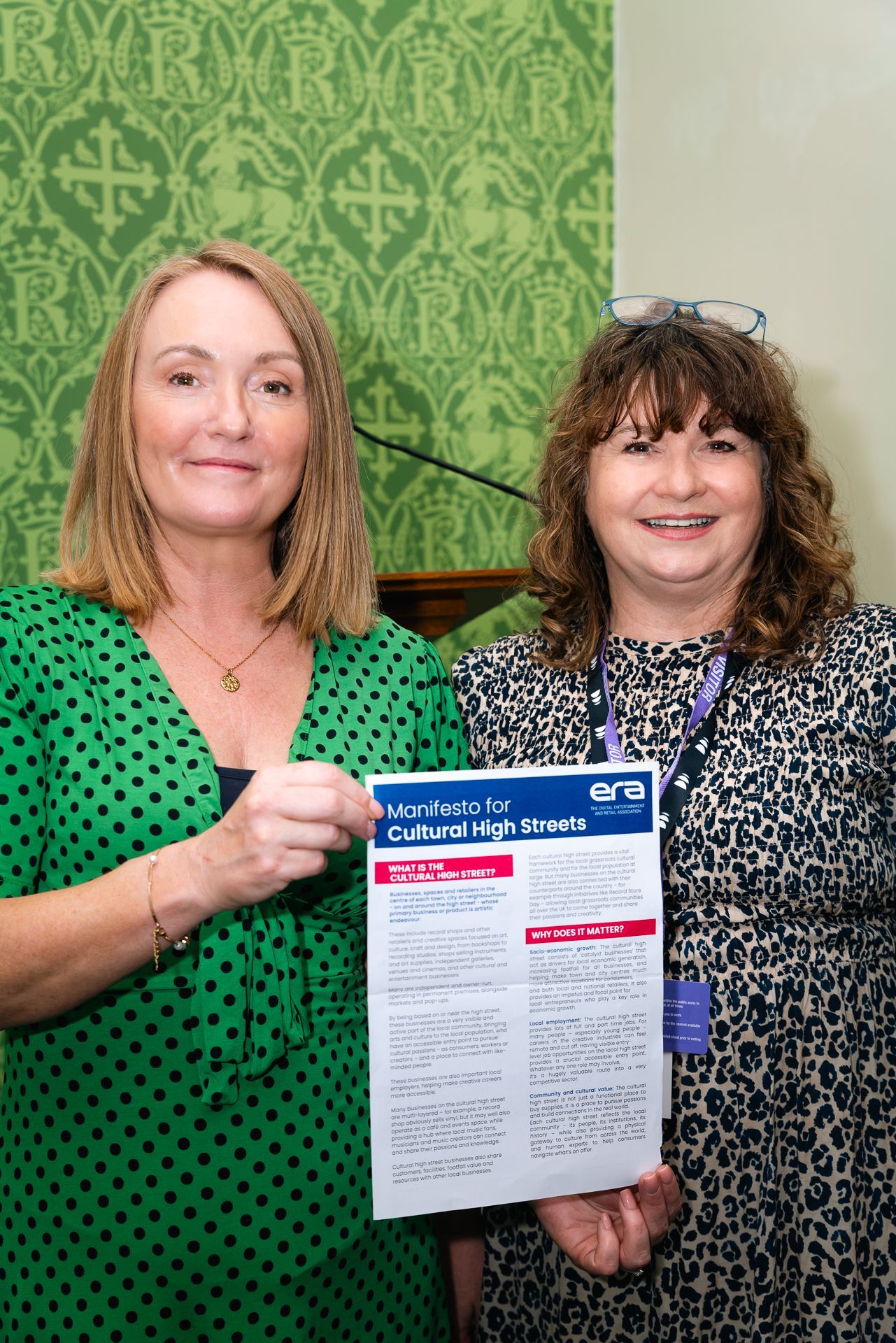
Yesterday, ERA launched a Manifesto for Cultural High Streets at Creative UK’s Westminster Summer Reception, held at the Churchill Room at the House of Commons, by Jo Platt MP.
With business rates and other costs rising at an unprecedented pace, and compounding years of pressure after Brexit and Covid, cultural businesses are at a tipping point, risking closure, reduced staffing, or relocation, as a direct result of rising overheads.
With recent concessions being made for hospitality and live music venues, ERA believe their record shop members are deserving of a break too; they do more than sell music, they nurture new talent, host gigs and collaborate with venues, employing passionate creators and young people – and they keep local music scenes alive.
ERA’s Manifesto for Cultural High Streets applies to other retailers and creative spaces focused on art, culture, craft and design; from bookshops to recording studios, shops selling instruments and art supplies, independent galleries, venues and cinemas, and other cultural and entertainment businesses.
The manifesto outlines three key areas for how the Government can support the protection and progress of cultural businesses on high streets across the UK:
1. Expand hospitality business rate breaks to more cultural businesses, particularly those facilitating live events and experiences. Recognising that cultural businesses on the high street provide cultural community experiences and grassroots talent support.
2. Incentives for small businesses to hire locally. 'Hire local' incentives such as grants for local employment and training, and access to local transport. Costs of employment have soared. Cultural businesses on the high street are local, valuable, accessible and reliable employers, who can also provide crucial entry points for young people seeking to pursue a creative career. Policy must enable these opportunities with creative incentives.
3. Encourage whole high street planning, supporting cultural businesses to improve local living value. Local authority support for cultural enterprise is a structural, practical, holistic endeavour. Local authorities can facilitate growth and regeneration with thoughtful initiatives, supportive of local and small enterprise.
ERA CEO, Kim Bayley, said in her speech:
“Running an independent cultural business has never been easy, and today it requires constant innovation, resilience and determination simply to stay afloat. We stand at another crossroads. Because record shops are just one example of something much bigger. Cultural businesses are catalysts for regeneration.
“They bring people into town centres. They encourage people to stay longer, spend locally and return regularly. They support neighbouring cafés, bars, venues and restaurants. They create jobs, develop skills and offer routes into creative careers. Most importantly, they make our high streets places people actually want to visit. That is what grassroots really means.
“It means opportunities that are rooted in every community. It means real jobs, real businesses and real chances for young people to build creative careers close to home.
“Today, we're launching our Manifesto for Cultural High Streets because we believe it's time to put culture at the heart of regeneration. Cultural businesses share values and customers and ensuring their success will ensure that all high street businesses thrive.”
Jo Platt MP also announced she would be launching an APPG For The Cultural High Street in September, which will kick-start the process of mapping the businesses that make up the cultural high street, documenting current success stories in different local communities, and demonstrating the social, economic and cultural value of these and other support mechanisms.
Jo Platt MP for Leigh and Atherton, said: “As an MP, I see this as my responsibility to make a case for creative industries every single day. To remove the barriers, and there are many, and recognise creativity as one of this country's greatest strengths […] We need fair opportunities, proper training and clear pathways into creative careers, in every part of the country.”
ENDS